


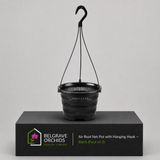
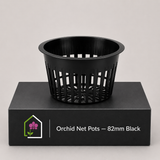
Images: Flower images show typical blooms of the listed plant or clone where available. Whole-plant images may be representative of growth stage and may vary in size and presentation. Accessory images are representative — colours and minor details may vary slightly. Individual items may differ depending on season and conditions.
Dendrobium linguiforme (Syn. Dockrillia linguiformis)
Dendrobium linguiforme (Syn. Dockrillia linguiformis)
Couldn't load pickup availability
Pairs well with
Dendrobium linguiforme (Syn. Dockrillia linguiformis), the Tongue Orchid, is a creeping Australian native epiphyte with thick, fleshy, tongue-shaped leaves and small, fragrant flowers in late winter to spring. It was the first Australian orchid formally described, by Olof Swartz in 1800. It is one of the most widely grown and adaptable of the native epiphytes, and once established on a suitable mount it largely looks after itself. This is a flowering size division.
About this plant
- Origin: Occurs naturally from the south coast of New South Wales north to far north Queensland, on both trees and exposed rock faces.
- Plant: Thick, fleshy, tongue-shaped leaves along a prostrate creeping rhizome. It spreads and mats over its substrate over time.
- Flowering: Late winter to spring, in racemes of up to 20 flowers per spike.
- Flowers: White to cream with pink-purple markings on the lip. They are small, about 10mm across, but produced in quantity and pleasantly scented.
Growing conditions
- Temperature: Highly adaptable. It tolerates a wide temperature range, including summer heat, and is one of the more heat-tolerant Australian native epiphytes. Our listing range is 5°C to 26°C, and it needs cool nights.
- Light: Bright filtered light. It tolerates more sun than most Dockrillia, and in habitat it grows on exposed rock faces and open tree trunks.
- Humidity: 60% or higher.
- Water: Water freely in summer and reduce significantly in winter. Allow to dry thoroughly between waterings. It tolerates drought once established.
- Mounting: Must be grown mounted, on cork, a hardwood slab, or directly onto rock or bark. Pot culture is rarely successful because of the creeping rhizome habit. Avoid repotting or disturbing established plants.
- Feeding: Light feeding with dilute balanced fertiliser through the growing season. Cease in winter.
What you'll receive
One established flowering size division (a piece divided from an established plant), packed carefully to protect the rhizome and root system in transit. It ships from the Dandenong Ranges, Victoria.
Growing information: Dockrillia Care Guide
View full details
