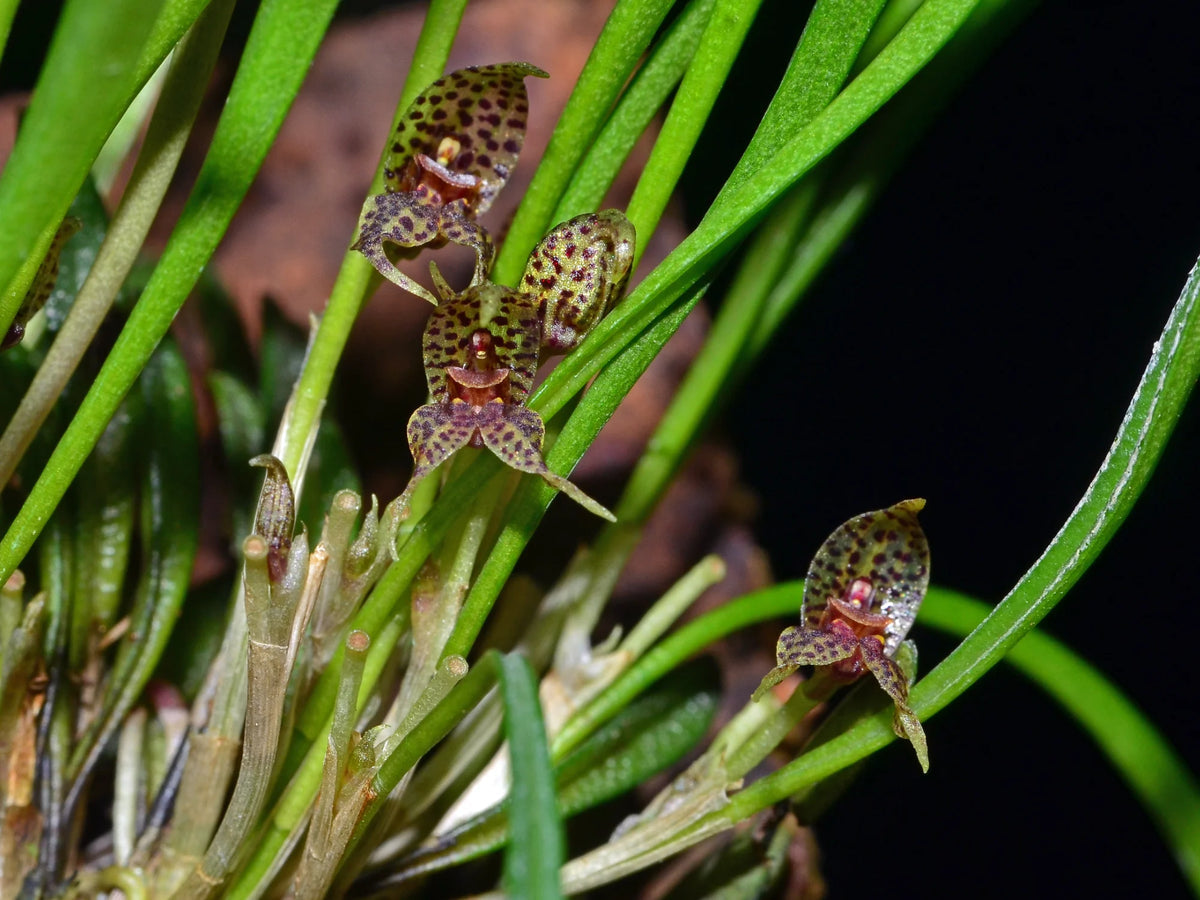

Images: Flower images show typical blooms of the listed plant or clone where available. Whole-plant images may be representative of growth stage and may vary in size and presentation. Accessory images are representative — colours and minor details may vary slightly. Individual items may differ depending on season and conditions.
Dryadella hirtzii
Dryadella hirtzii
Couldn't load pickup availability
Dryadella hirtzii is a miniature epiphyte endemic to Ecuador, found in cloud forest at around 2000 to 3400 metres. It was described by Carlyle Luer in 1980 and named for Alexander Hirtz, who discovered it. Small flowers with translucent white sepals, spotted and barred in dark red-brown, sit low among upright, narrow leaves.
What to expect
- Flowers: About 7 mm across, white with dark red-brown spots and bars and a red-brown lip. Each lasts around three weeks.
- Plant: Clustered stems 1–1.5 cm tall, each with a single upright, fleshy leaf 7–9 cm long, often flushed red-purple when young.
- Size: A true miniature, well suited to a small pot or a terrarium.
Growing notes
- Temperature: Cool to cold. Summer heat is the main risk.
- Light: Shade to filtered light. No direct sun.
- Water: Keep evenly moist; never let it dry out.
- Humidity & air: High humidity with good air circulation at all times.
Shipping & condition
Supplied at flowering size – either a mature plant or a division from a plant that has already flowered – grown on in the Dandenong Ranges. Plants are packed on Sunday and sent on Monday. Buds and flowers cannot be guaranteed at time of shipping due to seasonal and environmental factors.
Growing information: Pleurothallid Orchid Care Guide
View full details