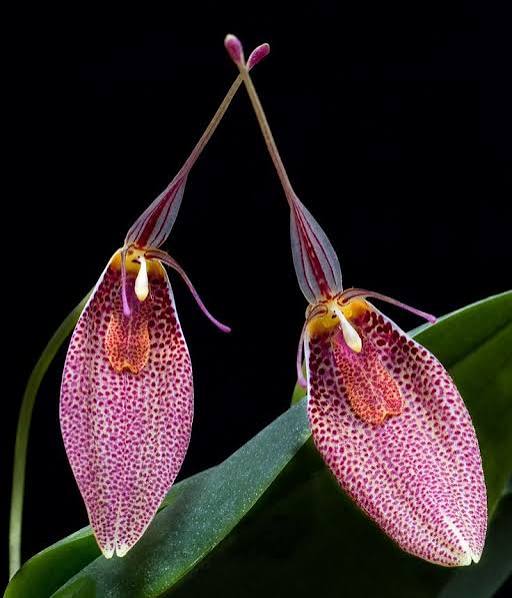

Images: Flower images show typical blooms of the listed plant or clone where available. Whole-plant images may be representative of growth stage and may vary in size and presentation. Accessory images are representative — colours and minor details may vary slightly. Individual items may differ depending on season and conditions.
Restrepia guttulata
Restrepia guttulata
Couldn't load pickup availability
Restrepia guttulata is a compact epiphyte from cloud forest in Colombia, Venezuela and Ecuador. As in all Restrepia, the flower is dominated by the fused lateral sepals (the synsepal), here densely spotted, with a slender dorsal sepal and petals that end in small clubbed tips like antennae. The name means ‘finely spotted’.
What to expect
- Flowering: Single flowers arise one at a time from the base of the leaf. Established plants can flower over much of the year.
- Flowers: Spotted synsepal with a narrow dorsal sepal and clubbed petals.
- Plant: Tufted, with slender sheathed stems and leathery leaves more than twice as long as wide. No pseudobulbs.
- Propagation: Restrepias sometimes form small plantlets (keikis) at the base of a leaf.
Growing notes
- Temperature: Cool to intermediate, with a clear drop at night.
- Light: Shade to filtered light. No direct sun.
- Water: Keep evenly moist at all times.
- Humidity & air: High humidity, ideally 70% or more, with gentle air movement.
Shipping & condition
Supplied at flowering size – either a mature plant or a division from a plant that has already flowered – grown on in the Dandenong Ranges. Plants are packed on Sunday and sent on Monday. Buds and flowers cannot be guaranteed at time of shipping due to seasonal and environmental factors.
Growing information: Pleurothallid Orchid Care Guide
View full details